

The prospects of Indonesia’s aircraft MRO industry are supported by recurring fleet-maintenance requirements, the country’s geography, and growing pressure on maintenance capacity across the Asia-Pacific region. Opportunities extend from airframe and engine maintenance to component repair, avionics, wheels and brakes, spare-parts supply, and technical training.
Aircraft cannot continue operating simply because passenger demand is rising. Every aircraft must undergo scheduled inspections, component replacements, repairs, and safety checks.
The more frequently an aircraft operates, the greater its need for maintenance, repair, and overhaul services.
For Indonesia, the question is no longer whether a market exists. The more important issue is whether high-value maintenance work can be performed domestically instead of being sent to overseas facilities.
What Is Aircraft MRO?
MRO stands for maintenance, repair, and overhaul. It covers the work required to keep an aircraft safe, operational, and compliant with airworthiness regulations.
The scope ranges from routine inspections between flights to major structural work and complete engine overhauls. Because aircraft safety is involved, each task must be performed by approved organisations, qualified technicians, and properly equipped facilities.
Aircraft Maintenance
Maintenance includes scheduled inspections, component replacements, system testing, and preventive work conducted before a fault develops into a serious problem.
Some tasks can be completed while an aircraft is parked between flights. Heavier maintenance requires hangars, specialised equipment, and longer ground time.
Aircraft Repair
Repair work is performed when damage or a system fault is identified. It may involve the aircraft structure, avionics, hydraulics, cabin equipment, wheels, brakes, or engine components.
Aircraft Overhaul
An overhaul involves dismantling, inspecting, repairing, testing, and reassembling an aircraft component.
An engine overhaul, for example, may require the engine to be separated into individual modules for detailed inspection. The process depends on specialised facilities, experienced personnel, technical records, and reliable access to replacement parts.
Why Is Indonesia’s Aircraft MRO Market Attractive?
Indonesia has an aviation market that naturally requires a strong maintenance network. Its geography makes air transport essential for moving passengers and cargo between islands.
A large aviation market, however, does not automatically make Indonesia a regional MRO centre. Hangar capacity, certification, qualified personnel, component availability, and turnaround time determine whether operators use domestic facilities or send their aircraft abroad.
Active Fleets Create Recurring Demand
MRO is not only required when an aircraft develops a fault. Maintenance is scheduled according to calendar periods, flight hours, or the number of take-off and landing cycles.
This makes MRO demand recurring. As long as an aircraft remains in operation, inspections and component replacements will continue to be required.
Airlines cannot postpone this work indefinitely because scheduled maintenance is directly connected to an aircraft’s airworthiness status.
Indonesia Operates Across a Dispersed Domestic Market
Flights in Indonesia serve regions with different airport conditions and aircraft requirements. Narrow-body jets operate on high-density routes, while turboprop aircraft connect cities with more limited airport infrastructure.
This variety creates maintenance demand across several aircraft categories rather than a single fleet type.
In addition to heavy hangar maintenance, operators require line maintenance, aircraft-on-ground support, component inspection, and technical personnel at airports throughout the country.
Global MRO Capacity Is Under Pressure
Demand for engine maintenance has increased as aircraft deliveries have been delayed and airlines have kept older aircraft in service for longer. Older fleets generally require more intensive maintenance.
Reuters, citing an analysis by Bain, reported that engine-maintenance turnaround times had increased significantly from pre-pandemic levels. Engine MRO demand was expected to remain under pressure through the end of the decade. This creates an opportunity for facilities capable of adding capacity without compromising safety standards. (Reuters)
MRO Business Segments with Growth Potential
The MRO industry is not limited to large aircraft hangars. It also includes component workshops, equipment suppliers, material distributors, laboratories, logistics companies, and training institutions.
Airframe Maintenance
Airframe maintenance covers inspections of aircraft structures, operating systems, cabins, and other areas examined during scheduled checks.
Demand can grow alongside fleet utilisation. Operators, however, will consider hangar availability, service quality, turnaround time, and the cost of keeping an aircraft out of operation.
Indonesian MRO facilities need to offer competitive turnaround times. Lower prices provide little advantage if an aircraft remains grounded longer than planned.
Aircraft Engine Maintenance
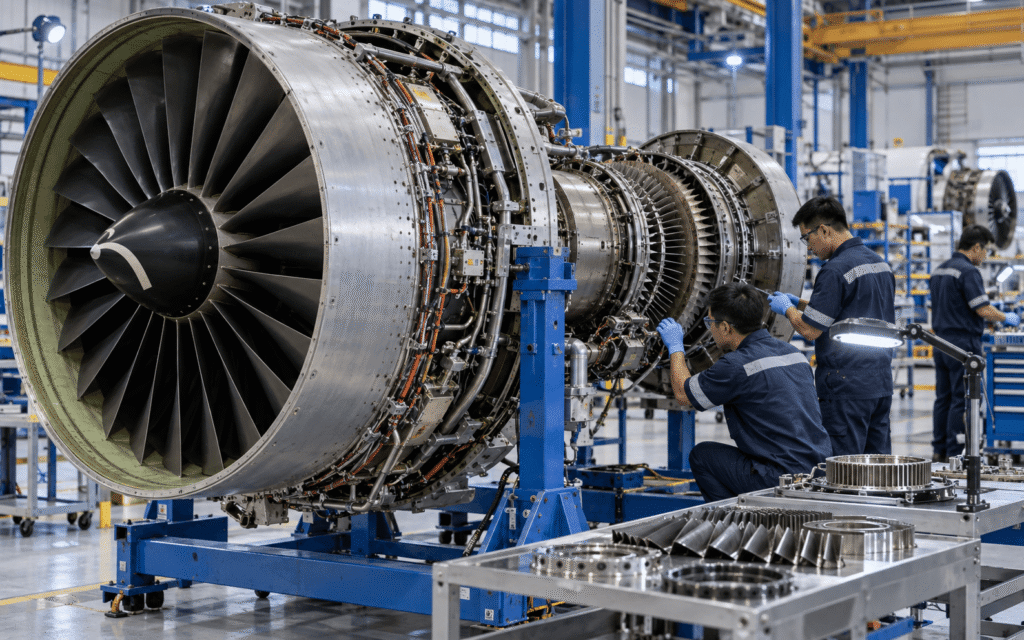
Engine MRO is among the most valuable segments of the industry, but it also has substantial barriers to entry.
Investment requirements include specialised tooling, test cells, technical documentation, qualified engineers, and approvals from regulators and equipment manufacturers.
Indonesia has opportunities in engine and engine-component maintenance. These capabilities should be developed gradually, beginning with engine types that have a sufficiently large operator base.
Component Repair
Component MRO covers wheels and brakes, avionics, hydraulic systems, electrical units, landing gear, and other removable aircraft equipment.
This segment gives specialist companies an opportunity to enter the market without operating a complete aircraft-maintenance hangar.
Local businesses can participate through inspection, testing, calibration, precision machining, surface treatment, or component repair within an approved scope of work.
Airport Line Maintenance
Line maintenance is performed while an aircraft remains within its operating schedule. It includes routine inspections, fault rectification, limited component replacement, and technical support before the aircraft returns to service.
Indonesia’s extensive airport network makes this segment strategically important. Operators require rapid technical support to prevent minor faults from developing into lengthy delays or flight cancellations.
Cabin Maintenance and Interior Modification
The cabin is the part of an aircraft most frequently used by passengers. Seats, panels, lighting, galleys, lavatories, and entertainment systems require regular maintenance and refurbishment.
Business opportunities extend beyond repair. Airlines may also change cabin configurations, improve passenger comfort, reduce weight, or update their visual identity.
Domestic Companies Provide an Industry Foundation
Indonesia already has companies with aircraft-maintenance and aerospace-engineering capabilities. Prospects of Indonesia’s Aircraft MRO Industry especially GMF AeroAsia provides commercial aircraft MRO services, while Indonesian Aerospace has experience in aircraft, helicopter, and component maintenance.
The official Indonesian Aerospace portfolio also includes aircraft and engine services, engineering, system integration, and maintenance capabilities. (Indonesian Aerospace)
Large companies provide an important foundation, but a complete MRO ecosystem cannot depend on only a few major facilities. The sector also needs specialist workshops, component suppliers, training institutions, logistics companies, and equipment manufacturers.
Opportunities for Medium-Sized Companies
Medium-sized companies can participate through specialised services such as tooling, non-destructive testing, calibration, surface treatment, material management, cabin refurbishment, and component distribution.
They do not need to maintain an entire aircraft from the beginning. Entering through a narrower but properly certified capability may offer a more realistic route into the market.
Opportunities for Domestic Component Manufacturers
Locally available components could reduce delivery times and dependence on international supply chains. However, aviation components cannot be produced according to general industrial standards.
Materials, manufacturing processes, documentation, traceability, and quality controls must meet aviation requirements.
The opportunity is considerable, but participating companies must be prepared to invest in certification, testing, and disciplined production systems.
Challenges Facing Indonesia’s Aircraft MRO Industry
Strong market potential does not make the sector easy to enter. MRO is capital-intensive, highly regulated, and exposed to significant operational risks.
Dependence on Imported Components
Many components, materials, and MRO tools are still sourced from overseas. Delivery delays can extend the length of time an aircraft remains inside a hangar.
This becomes particularly difficult for parts with long lead times or components that are only identified for replacement after an aircraft has been dismantled.
Shortage of Certified Technical Personnel
Aircraft technicians require more than practical mechanical skills. They must understand technical procedures, documentation, workplace safety, and regulatory requirements.
Workforce development requires cooperation among MRO companies, vocational schools, universities, regulators, and technology owners. Training must also follow changes in aircraft and engine types.
High Facility Investment
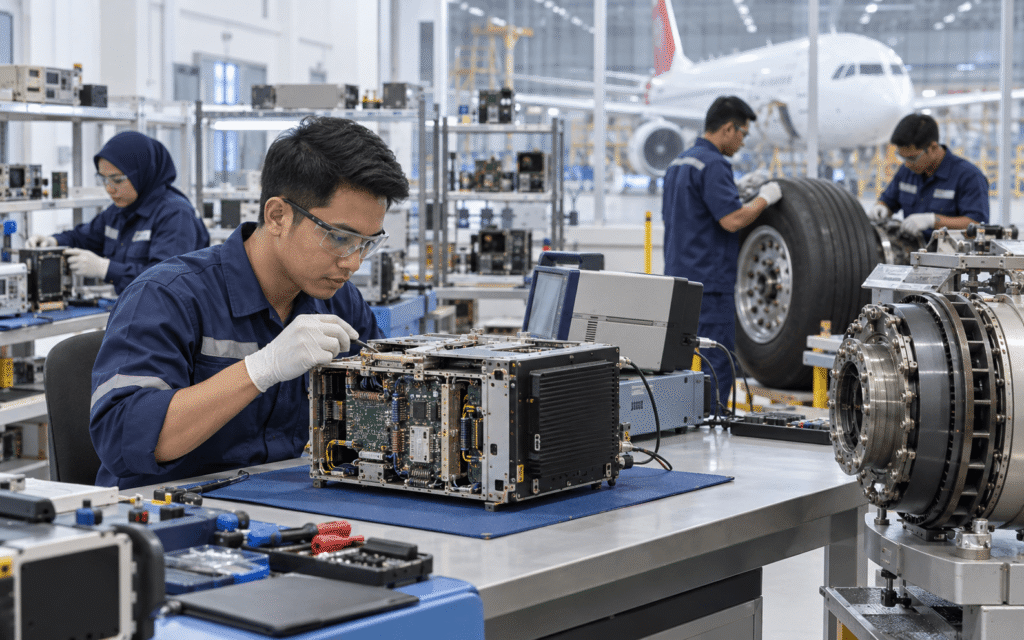
Hangars, test equipment, tooling, component warehouses, and maintenance-management systems require substantial capital. Certain facilities must also comply with strict safety and environmental requirements.
Investment decisions should therefore be based on confirmed demand, the aircraft types being served, and long-term service contracts.
Certification Determines Market Access
Facilities seeking to serve foreign-registered aircraft or operators with specific requirements may need additional approvals.
Certification is not merely a marketing document. It defines which aircraft, components, and maintenance tasks an organisation is authorised to handle.
How Can Indonesia Strengthen Its MRO Industry?
Prospects of Indonesia’s Aircraft MRO Industry needs a strategy that goes beyond increasing hangar space. Capacity should be developed according to fleet requirements and maintenance work that is still being sent abroad.
Build Capabilities Around Dominant Fleet Types
Investment should focus on aircraft, engines, and components with a sufficiently large domestic or regional user base.
This approach can improve facility utilisation, support technician specialisation, and shorten the period required to recover investment.
Strengthen the Component Supply Chain
MRO centres need rapid access to materials and replacement parts. Shared warehouses, component-exchange programmes, local repair capabilities, and partnerships with manufacturers can reduce turnaround times.
Connect Education with Hangar Requirements
Aviation engineering programmes should reflect actual workplace requirements. Internships, aircraft-type training, and access to practical facilities can help graduates adapt more quickly to an MRO environment.
Position Indonesia as a Regional MRO Destination
Indonesia’s location between Southeast Asian markets and Australia creates an opportunity to serve foreign operators.
Location alone, however, is not enough. Domestic facilities must offer reliable safety standards, appropriate certification, competitive pricing, and predictable turnaround times.
The Role of AEROTECH Indonesia in the MRO Ecosystem
MRO growth requires cooperation among operators, technology providers, component manufacturers, distributors, regulators, and educational institutions.
AEROTECH Indonesia can provide a business platform connecting these groups. The exhibition is relevant not only to aircraft companies but also to suppliers of tooling, avionics, inspection equipment, hangar systems, ground support equipment, software, and technical training.
Connecting Buyers with Technology Providers
At a B2B exhibition, companies can compare products, discuss technical requirements, and identify potential local partners directly.
This form of meeting is particularly important in an industry where purchasing decisions cannot be made through product catalogues or brief sales conversations alone.
Opening the Market to New Suppliers
The exhibition can also help companies from supporting industries understand aviation-sector requirements.
Material producers, precision manufacturers, laboratories, logistics companies, and digital-technology providers may use the event to identify practical routes into the MRO supply chain.
The Future of Indonesia’s Aircraft MRO Industry
The prospects of Indonesia’s aircraft MRO industry will depend on whether domestic companies can convert local maintenance demand into work performed within the country.
Demand already exists through flight activity, mandatory maintenance schedules, and the need to keep aircraft available for operation. The challenge is to develop capacity, certification, component availability, and qualified personnel at the same pace.
If these elements progress together, Indonesia could reduce its dependence on overseas maintenance facilities and become a competitive MRO provider for the regional aviation market.
Frequently Asked Questions About Indonesia’s Aircraft MRO Industry
What Does Aircraft MRO Mean?
MRO stands for maintenance, repair, and overhaul. It includes the inspection, maintenance, repair, and restoration of aircraft and their components to keep them safe and airworthy.
What Are the Prospects for Indonesia’s Aircraft MRO Industry?
The outlook is promising because Indonesia has extensive inter-island air services, fleets requiring recurring maintenance, and opportunities to retain more MRO work domestically. Growth will depend on capacity, certification, spare-parts availability, and technical expertise.
What Services Are Included in Aircraft MRO?
Services include line maintenance, airframe maintenance, engine overhaul, component repair, avionics, wheels and brakes, landing gear, cabin maintenance, painting, and aircraft-on-ground support.
Why Do Airlines Require MRO Services?
Airlines require MRO services to maintain airworthiness, meet scheduled maintenance requirements, prevent failures, and keep aircraft available for commercial operation.
What MRO Opportunities Exist for Indonesian Companies?
Opportunities include component repair, tooling, inspection, calibration, spare-parts distribution, cabin maintenance, precision manufacturing, maintenance software, logistics, and technical training.
What Are the Main Challenges Facing the Industry?
The main challenges include dependence on imported components, limited numbers of certified technicians, high facility investment, long component lead times, and strict certification requirements.
Can Indonesia Become a Southeast Asian MRO Hub?
Indonesia has the domestic market and geographical position to become a regional MRO hub. To achieve this, local facilities must provide internationally recognised safety standards, competitive turnaround times, strong technical capabilities, and reliable pricing.
Why Are Industry Exhibitions Important for the MRO Sector?
Industry exhibitions connect operators with suppliers of technology, components, equipment, and services. These meetings can create partnerships, support investment, encourage knowledge transfer, and provide access to qualified buyers.